

Hell Is Us is one of the most unique games released in 2025; it’s dark yet soulful, with a well-crafted roster of characters. I got the opportunity to speak with the minds behind this game, Jonathan Jacques-Belletête and Elias Toufexis, at MCM London Comic Con this past October.
- The Escapist recaps
- Crafting Hadea
- What does an emotion look like?
- A sprinkle of Deus Ex for good measure
- Ask The Escapist
Below, you’ll find The Escapist’s full interview with Jonathan and Elias – looking at both Hell Is Us and how the world of Hadea came to be, along with questions about Deus Ex and the passion both artists have for that franchise.
The Escapist recaps
- Hell Is Us is a dark action-adventure game with Soulslike flair, developed by Rogue Factor and published by Nacon.
- Jonathan Jacques-Belletête is the creative director of Hell Is Us, while Elias Toufexis is the actor behind the main character Rémi.
- I spoke to both creatives at MCM London Comic Con on October 24, 2025, discussing Hell Is Us and the work that went into building the world of Hadea, the dark storyline, and the complex character of Rémi.
- While we focused on Hell Is Us predominantly, we did also discuss Deus Ex; both Jonathan and Elias are a crucial part of the franchise’s legacy.
Crafting Hadea

Jonathan began by discussing what the early stages of crafting Hadea – the world of Hell Is Us – looked like, saying that there’s never one way to start a game project; you’re always a victim of whatever circumstances you’re in at that moment.
“What I had first in my head was this idea of what I call player plattering,” He explained, “A game that’s 100% about the joy of exploring and discovering things, but without any of the artificial means of getting there.”
He’d noticed a recurring theme of open-world RPGs promising a heavy theme of exploration, but laying everything out on a compass or mini-map, with quest markers to take you to the right locations. The end result, Jonathan mused, is that players never truly orient themselves and genuinely figure out the world.
The aim with Hell Is Us was to create a world that players needed to really dig into; a world that had plenty for people to discover, without any of the yellow paint tacked on to take them from A to B.
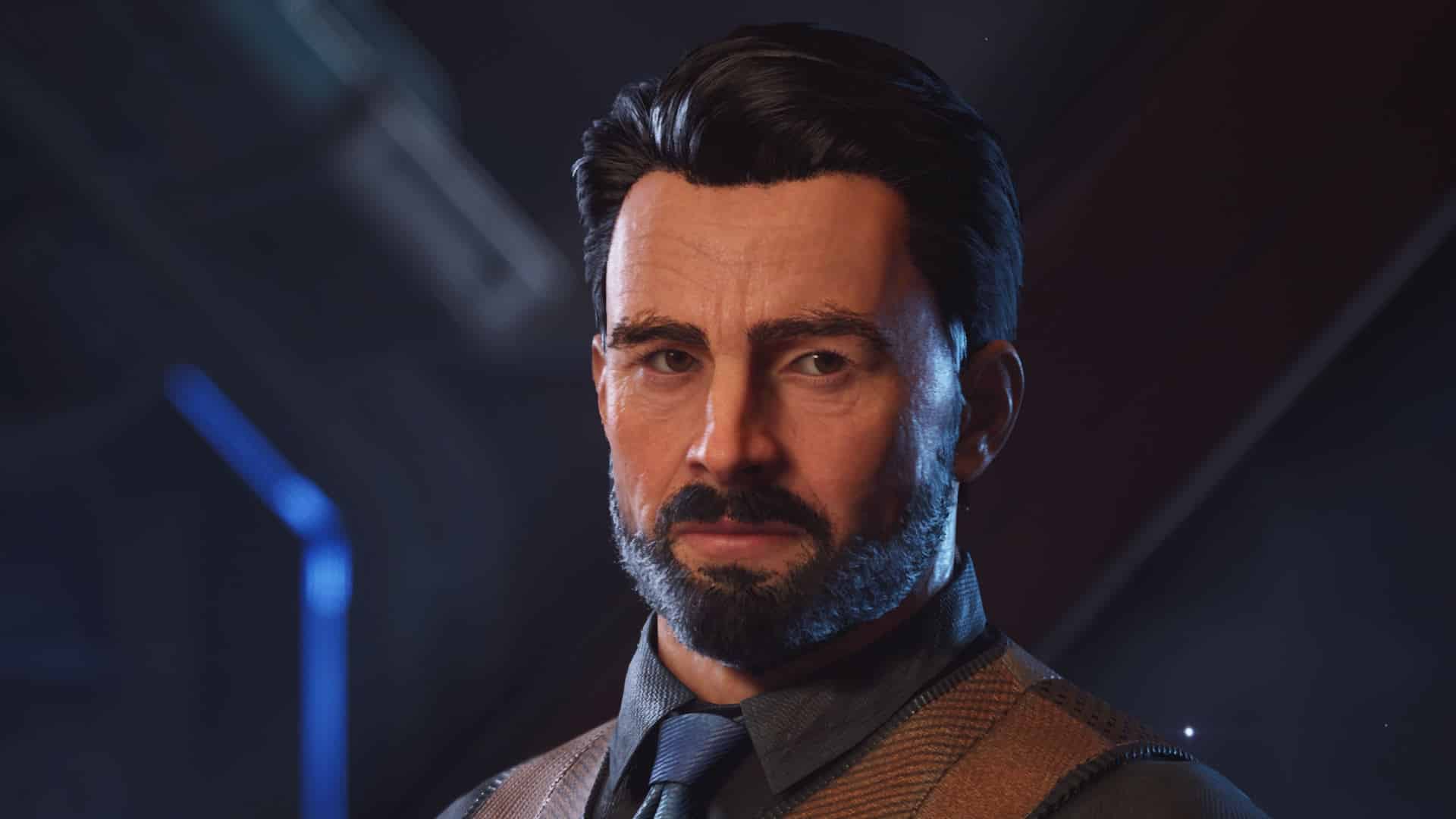
One of the highlights of this world is the characters within it, with the protagonist, Rémi, being one of the most memorable. I wondered what the process of bringing a character like Rémi to life looked like, and Elias shared that the best place to start was with the people who’d created the characters themselves.

“You look at a bird’s eye view and then you get closer and closer, right?” He explained, “Where does the character start, where does he end? And then we talk about how he gets there…In the end, being an actor is simply about serving the story. It’s not even to serve the character – it’s what the character is within the story.”
Elias has worked on numerous intriguing projects in the gaming world, but he has also worked in film and television. I was curious whether the process of bringing a character to life for a game versus the big screen; he revealed that the difference was only technical.
“It’s a different kind of scripting than a TV show or an animation,” he noted, “But you have to find the truth in it, no matter what.”
What does an emotion look like?

Something that I particularly loved about Hell Is Us is how cinematic it felt in places; each cutscene felt like it could’ve been woven into a movie, and the monsters felt like they could’ve wandered out of a classic horror.
Elias highlighted the scene where Rémi starts freaking out as his favorite – I won’t spoil what happens for anyone who hasn’t played, but I agree, it’s an impactful scene – saying that he’s “always wanting to go to 10,” before adding the ending as another scene he particularly loved.
Jonathan shared that, from the get-go, he wanted to focus on a civil war when working on Hell Is Us.
“It had to be a thesis on the cycle of violence, and, you know, this inclination to barbarity,” he explained, “I wanted to show this theme through another theme of emotions and passions. The thesis is this is caused because of our emotions and passions; it’s not just because of that, but it’s what we took in the hardest.”
He added that Rémi deliberately never actually harms a person in the game, saying, “I was like, people are going to be shown in such horrendous, dire situations. I don’t want the players to hit them in the head more…
So really early on, we’re like, ok, we need creatures… we have this theme of civil war… caused by our emotions and our passions, so the enemies are going literally going to be the physical manifestation of our emotions and passions, and all that grief, ecstasy, terror, and rage.”

Jonathan continued to describe the process of bringing the Hollow Walkers and Hazes to life, saying that the team had to dig deeply into what an emotion actually was and what it might look like.
“My anger, I can’t send it anywhere, right?” He explained, “…I have to drive to work, remain pissed off the whole time during the drive, and get to work, and then it’s with me. And depending on how bad the anger is, it’s got a certain radius… Some people keep it more inside of them, like Rémi; some people are more extroverted, like me.”
This concept of emotions having a radius was the starting point for the monster design; the empty husk of the Hollow Walkers then followed, with the umbilical cord-like tether tying the Hazes to their hosts.
The team initially considered a more painterly aesthetic for the Hazes, but ultimately decided on the geometric, almost mathematical form they take in the game.
I wondered if the pair had a favorite enemy from the game – Jonathan pointed out the first Rage Haze as his favorite, while Elias picked out the behemoth Protector as the most memorable for him.
A sprinkle of Deus Ex for good measure

Before bringing the interview to a close, I had to delve into Deus Ex briefly and find out more about what the pair wished could’ve happened with a new Adam Jensen-centric game.
Jonathan described the groundwork for an area that’d been worked on, saying, “One of the main places was a city that was fully 3D printed… There were these ginormous cranes that were basically printers… yeah, that was great.”
Elisa shared, “I wanted to see the story that led to the original… there’s so much more story to tell,” before noting that the fan queues at MCM Comic Con had been made up of 70% Deus Ex fans, and that the community was very passionate.

“Adam Jensen, really, there was a bit of a perfect storm for that era…” Jonathan shared, “No, that character resonated, definitely.”
Elias added, “But it’s a shame they don’t want to do anything more with it…at least right now.”
Speaking to both Jonathan and Elias about Deus Ex was inspiring; I’m not someone who has dipped into the franchise much, but their clear love and reverence for it made me download their games as soon as I got home from the event.
“Right now, I think it’s officially longer between our last Deus Ex, if we were to do a new one, than there was between Warren Spector’s Deus Ex and ours,” Jonathan mused when I added that I was hopeful that we might see something new in the future.
If you’re a fan of rich, atmospheric games and haven’t taken your first steps into Hadea yet, I’d highly recommend it; Hell Is Us is arguably one of the most memorable titles of 2025, and the team that worked on it clearly has plenty more incredible stories to tell.
Ask The Escapist
Hell Is Us was developed by Rogue Factor and published by Nacon.
Hell Is Us was released on September 4, 2025.
Hell Is Us is available on PlayStation 5, Xbox Series X/S, and PC.
Hell Is Us isn’t a horror game or a jump-scare-oriented one, but it does feature heavy themes and dark imagery.




Last Updated On: Nov 26, 2025 3:20 pm CET